If your dog struggles to settle, if they're constantly on alert, if their nervous system seems stuck in activation mode, I want to share something that can help.
Scentwork.
Not as a training exercise or a sport, but as a tool for nervous system regulation. A way to help your dog shift from vigilance to calm, from stress to peace, from hyperarousal to genuine rest.
This advice works wonderfully alongside teaching your dog to stop pulling on the lead, simply because it meets their natural needs.
This advice works wonderfully alongside teaching your dog to stop pulling on the lead, simply because it meets their natural needs.
Let me explain how this works and give you three simple games you can start using today.
How Scentwork Settles the Nervous System
Three Settling Games You Can Start Today
Here are three simple scentwork games that help dogs settle.
Start with the first, and once your dog is comfortable and relaxed with it, you can progress to the others.
Scatter Feeding for Instant Calm
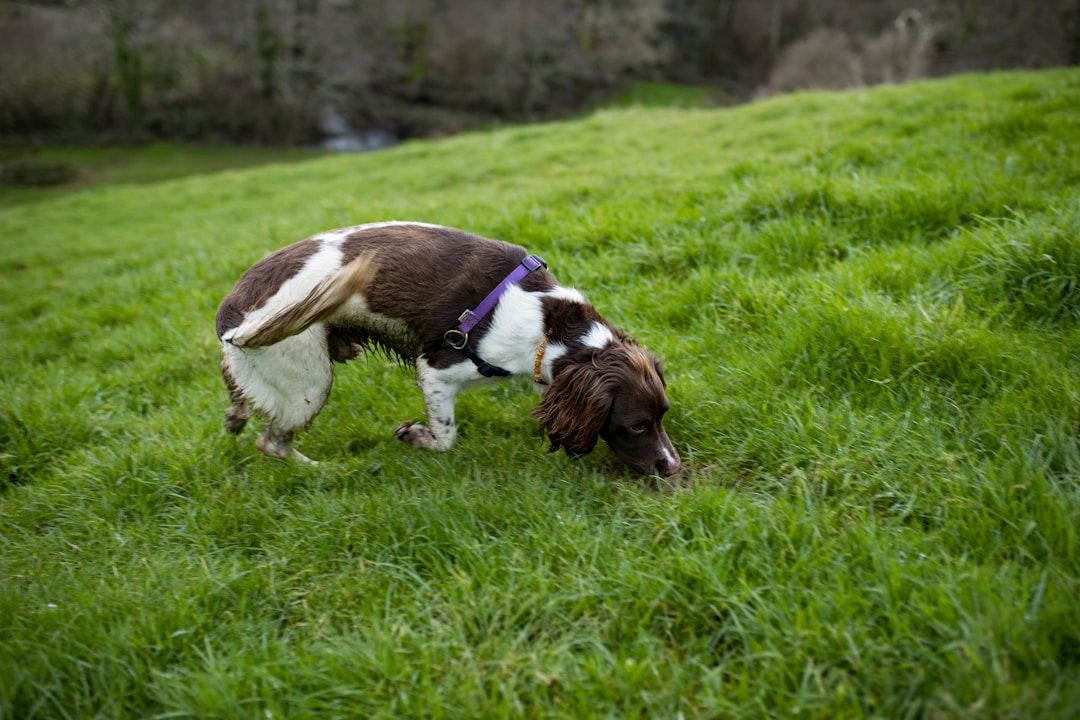
This is the simplest and most effective settling game I know. Take some of your dog's food or small treats and scatter them across the floor. Not in a pile, but spread out so your dog has to search and sniff to find each piece. That's it. That's the whole game.
Watch what happens to your dog's body. Within moments of starting to search, you'll often see their breathing slow, their muscles relax, their focus shift entirely to the ground investigation. This works because they're using their primary sense to solve a simple problem.
They're in SEEKING mode.
Their nervous system is downregulating through the act of sniffing. I use scatter feeding every single day with my dogs. Morning meals are scattered in the garden.
Evening treats are scattered in the living room.
Any time I notice tension building, I scatter feed. It's the fastest route to calm I've found. You can do this anywhere. In your home, in your garden, on a quiet bit of grass during a walk. The beauty of scatter feeding is its simplicity and immediate effect.
For dogs who struggle to settle in the evening, a scatter feed before bed can make an enormous difference. For dogs who wake up anxious, a morning scatter feed sets a calmer tone for the day. Start here. Do this daily. Notice the changes in your dog's ability to settle.
The Towel Roll Game for Deeper Engagement
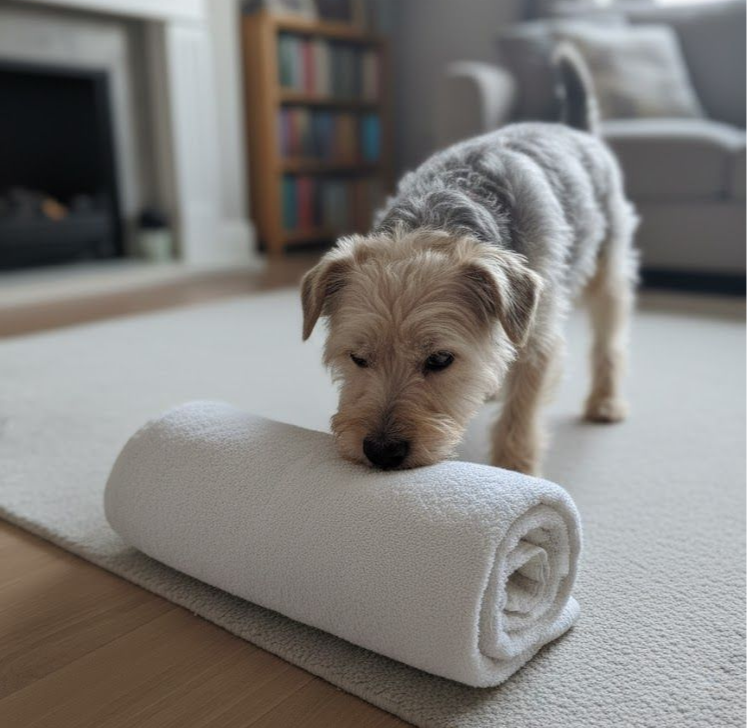
Once your dog is comfortable with scatter feeding, you can introduce slightly more challenging scentwork that requires more focus and problem-solving.Take a towel and lay it flat. Scatter treats along the length of it. Then roll the towel up loosely with the treats inside. Give the rolled towel to your dog and let them work out how to get the treats.
They'll sniff, paw, nose, and unroll the towel to access the food. This game requires more sustained focus than scatter feeding. Your dog has to problem-solve.
They have to use their nose to locate the treats within the towel, then figure out how to access them. This deeper engagement means longer periods in that calm, focused SEEKING state.
The sustained focus followed by success (finding all the treats) creates a natural wind-down. The nervous system has been engaged in something regulating, and afterwards, settling comes more easily.
You can vary the difficulty by how tightly you roll the towel. Loose for beginners, tighter as they get more confident. You can also use different textures, old t-shirts, or fleece blankets for variety.
This game works beautifully as part of a bedtime routine. Dinner, then a towel roll, then settle for the evening. The sequence becomes predictable and calming.
The Snuffle Mat for Extended Settling
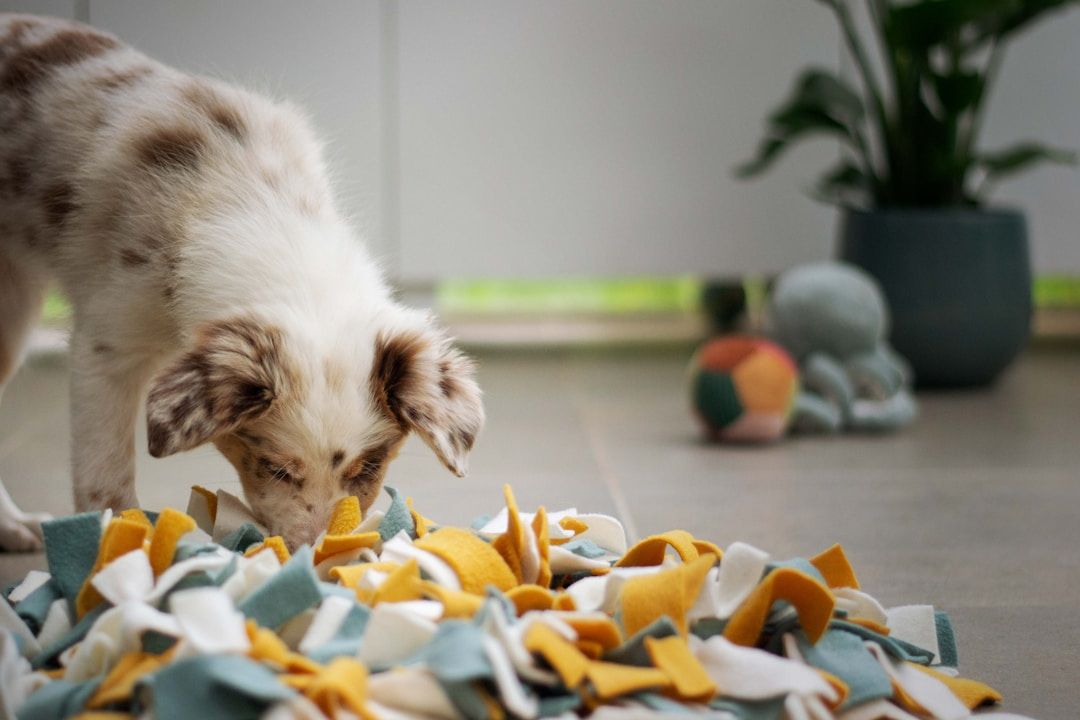
A snuffle mat is a rubber mat with fabric strips attached, creating lots of hiding places for treats.
You can buy them or make your own, but the principle is simple: hide food in a textured surface that requires sustained nose work to find everything.
Sprinkle treats throughout the mat and let your dog search. They'll sniff deeply, use their nose to locate each piece, and work methodically through the mat. What makes this game particularly good for settling is the extended duration. A good snuffle mat session can last 15 to 20 minutes.
That's 15 to 20 minutes of sustained parasympathetic activation. Of being in SEEKING mode rather than FEAR mode.
Of deep, focused breathing and problem-solving. For dogs who really struggle to settle, particularly in the evening when the household is winding down, a snuffle mat can be the bridge between daytime activation and nighttime rest.
I use snuffle mats when I need my dogs to settle for a sustained period. When I'm working and need them calm. When visitors are coming and I want to give them something regulating to focus on. When the evening energy is high and I need to bring things down.
The beauty of snuffle mats is that dogs self-regulate the pace. They work through it as quickly or slowly as they need. There's no pressure, no timer, no expectation. Just investigation and discovery at their own speed.
If you don't have a snuffle mat, you can create a similar experience by hiding treats in a shallow cardboard box filled with crumpled paper, if your dog can be confident approaching that as a novel item.
You can buy them or make your own, but the principle is simple: hide food in a textured surface that requires sustained nose work to find everything.
Sprinkle treats throughout the mat and let your dog search. They'll sniff deeply, use their nose to locate each piece, and work methodically through the mat. What makes this game particularly good for settling is the extended duration. A good snuffle mat session can last 15 to 20 minutes.
That's 15 to 20 minutes of sustained parasympathetic activation. Of being in SEEKING mode rather than FEAR mode.
Of deep, focused breathing and problem-solving. For dogs who really struggle to settle, particularly in the evening when the household is winding down, a snuffle mat can be the bridge between daytime activation and nighttime rest.
I use snuffle mats when I need my dogs to settle for a sustained period. When I'm working and need them calm. When visitors are coming and I want to give them something regulating to focus on. When the evening energy is high and I need to bring things down.
The beauty of snuffle mats is that dogs self-regulate the pace. They work through it as quickly or slowly as they need. There's no pressure, no timer, no expectation. Just investigation and discovery at their own speed.
If you don't have a snuffle mat, you can create a similar experience by hiding treats in a shallow cardboard box filled with crumpled paper, if your dog can be confident approaching that as a novel item.
Why These Games Work
Stay in Touch
Sign Up Here For More Free Advice
Thank you!
Created with